02 — THE NUMBERS AT A GLANCE
£700k
CRM Revenue within 6 months.
70%
Open rate average, increase from 19%.
73%
Increase to Customer Lifetime Value.
03 — the SITUATION
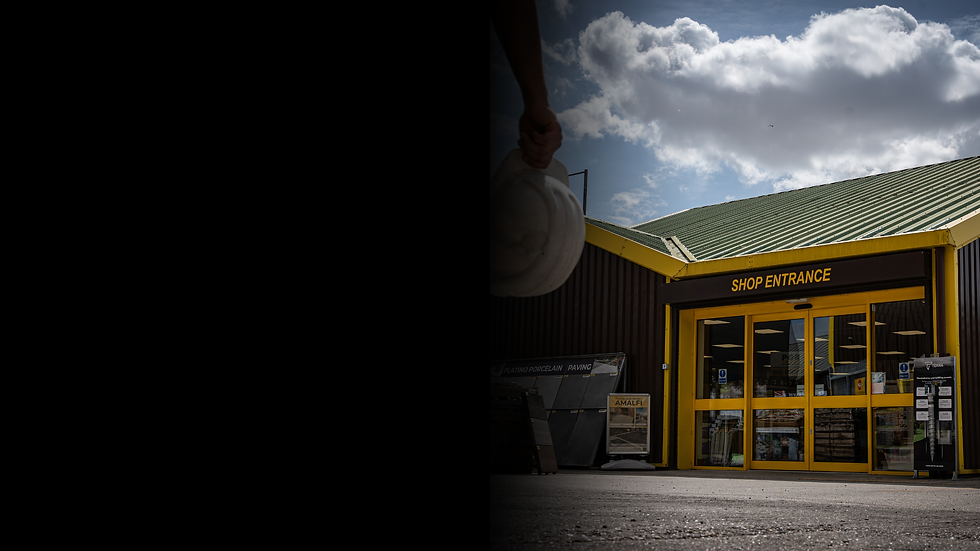
One of the largest independent builders merchants in the East of England. Strong trade reputation, busy branches, a customer base built over decades.
And 25,000 contacts sitting in Mailchimp doing nothing.
Campaigns went out once a month, at best, to everybody at once. No segmentation. No automation. Open rates at 19%, click rates at 0.2%. Nobody had set up revenue attribution, so nobody could tell you what email was worth. Online revenue was under £100,000 a year in a business turning over considerably more.
The marketing manager wasn't the problem. They were spending most of their week on admin that had nothing to do with marketing, which is what happens when a business hasn't decided marketing is a function worth protecting.
Deliverability had drifted badly. Unsubscribe rates were high, sender reputation was poor, and nothing had ever been warmed up properly. A good chunk of what went out was never landing anywhere anyone would see it.
The real problem was upstream of all of it. The directors didn't see the value in marketing, so it didn't get investment or attention. Sales didn't rate it, so they didn't feed it. And because nothing was measured, there was no evidence to argue with. A closed loop, and a common one.
04 — THE FUN BIT
what
We dId
01
made the commercial case first
Before touching a platform we spent time with the directors and the sales team explaining what marketing could be worth and how it would be measured. Nothing else would have survived without this. If a business doesn't believe marketing is an investment, any programme you build gets defunded the first time budgets tighten.
This is the step most agencies skip, and it's why their work doesn't outlast them.
03
connected the data
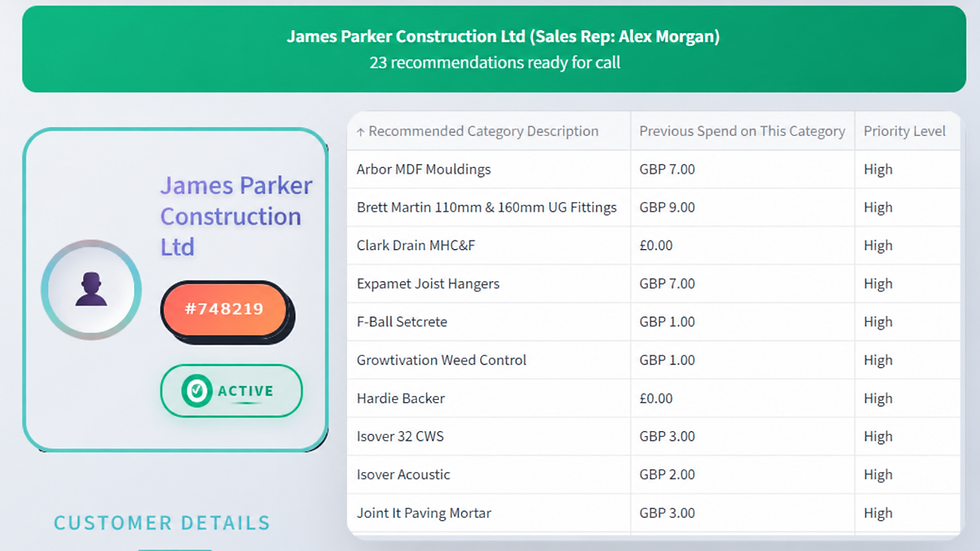
Working with the internal IT team, we integrated purchase history from the in-branch CRM with the marketing platform. Until that was done, every contact was just an email address.
Afterwards, every contact carried what they bought, when, how often and how much they spent.
Everything that followed depended on this step.
02
migrated to a modern tech stack
Mailchimp was the wrong tool for a business with this much transactional data and this many customer types.
We migrated fully and set up revenue attribution from day one, so every campaign and flow could be measured against actual money. It also brought additional capabilities including SMS & WhatsApp, automations through flows and advanced reporting into the toolkit.
04
segmented properly
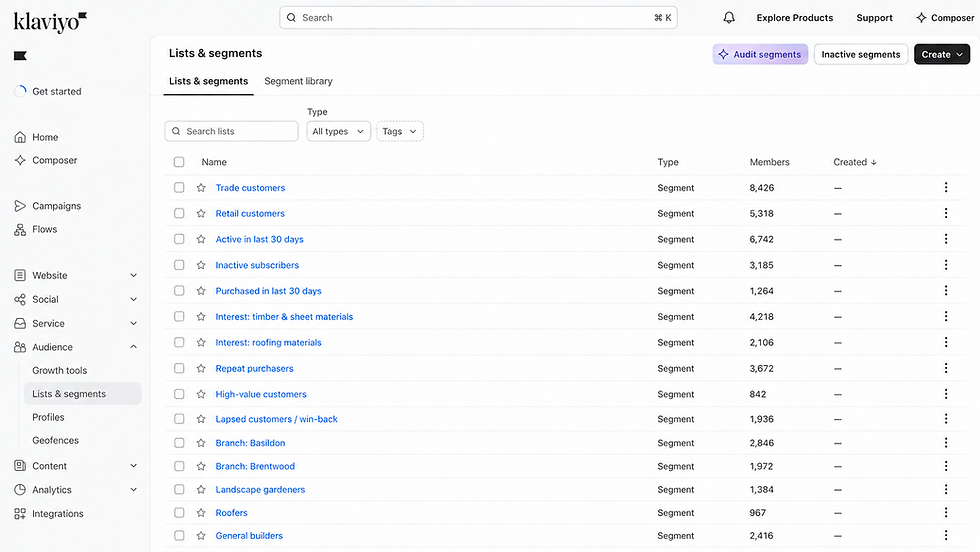
Split by trade type: builders, landscape gardeners, carpenters, roofers and others. Then layered with location, last purchase date, lifetime value, repeat purchase likelihood within a seven-day window, lapsed status and loyalty.
A roofer in Chelmsford who bought three weeks ago is a completely different prospect to a landscaper in London who hasn't been in since last summer. Before this, both got the same email.

05
rebuilt deliverability from zero
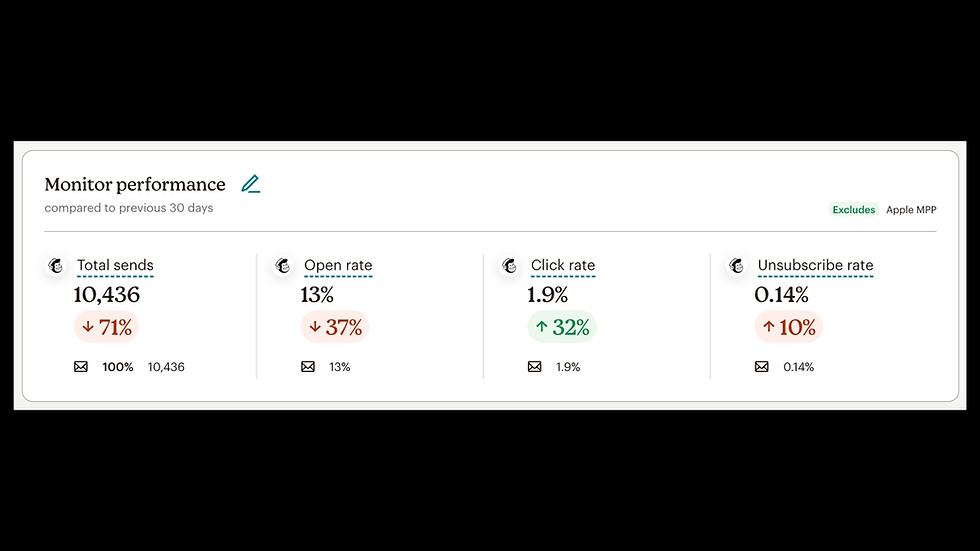
Spam complaint rates, unsubscribe rates and lack of authority contributed to a multitude of issues. Authentication, list cleaning and a staged warm-up campaign to rebuild sender reputation with the mailbox providers. The least visible work in the project, and the reason the open rate moved as far as it did.
No amount of good content fixes an email that doesn't arrive.

06
built automation architecture
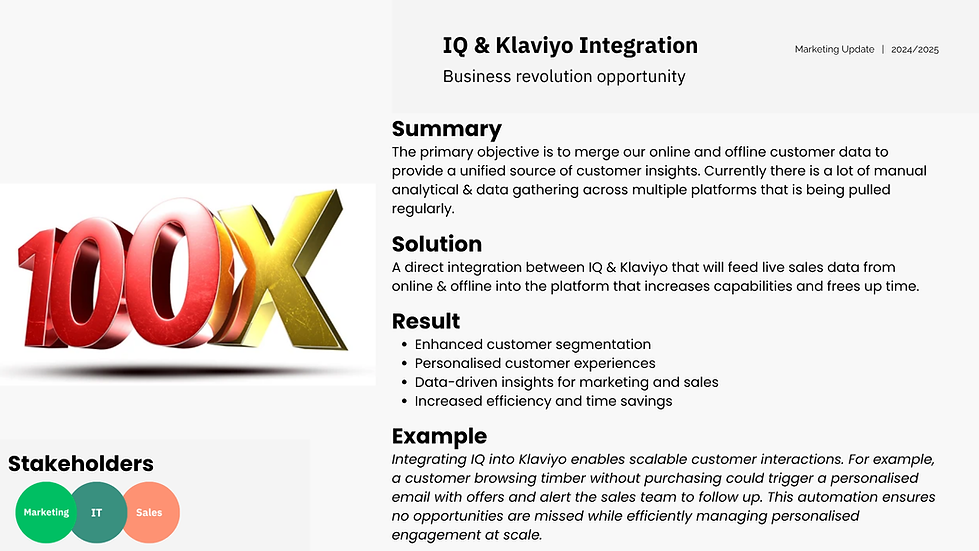
We designed and delivered the architecture for fourteen automated customer journeys, covering the full lifecycle—from welcome and post-purchase communications to lapsed-customer journeys and personalised reorder prompts triggered by purchase history.
The programme created more relevant, timely communication while reducing reliance on one-off campaigns.

07
content relevant to segments
Campaigns planned around what each customer type actually needed and when, rather than what was on offer that month.
04 — the outcome
What Worked
What Didn't Work
-
In the first six months from the initial warm-up campaign, CRM-attributed revenue reached £700,000. That covers online and in-branch together, tracked through the integrated data, which is what made it visible for the first time.
-
Open rates went from 19% to consistently above 70%. Most of that came from deliverability and segmentation rather than anything clever in the subject lines.
-
Over two years the list grew from 25,000 to 40,000 contacts, customer lifetime value improved by 73%, and CRM alone delivered £2.5m of revenue growth.
-
None of it came with a budget increase. The money came from the customers they already had.
-
The bigger shift was internal. Sales started actively working with marketing because they could see the impact in their own numbers. Marketing stopped being the department that made the brochures.
-
SMS. We expected it to perform given trade customers live on their phones, and it underperformed across everything we tried. We stopped rather than kept spending.
-
The hyper-personalised flows also took considerably longer than planned. A resourcing issue rather than a technical one, and it's the reason we now build a realistic sequence into every CRM plan rather than assuming everything lands in month two.